
 whatsapp


WELCOME TO ECO HOUSE !WELCOME TO ECO HOUSE !WELCOME TO ECO HOUSE !




News
05/09/26
Heart of the Window: How PVC Window Glazing Is Constructed
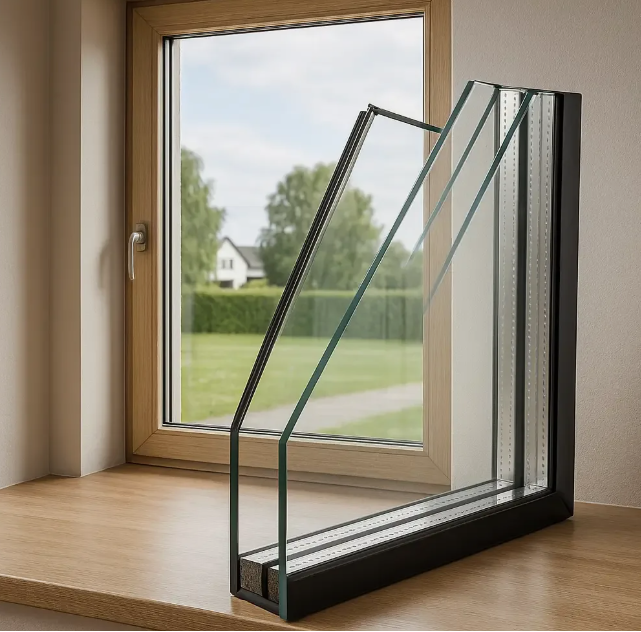
The insulating glass unit is the key element of a PVC window: it lets light in and protects against cold and street noise, creating a comfortable home environment. Essentially, it’s a sealed assembly of several panes separated by gaps — the chambers. Single‑chamber (two panes) and double‑chamber (three panes) units are the most common: striking a balance between insulation, weight, and cost is especially important here.
Spacer bars are installed between the panes — they set the chamber width and act as the unit’s frame. Inside the bar is a desiccant (e.g., silica gel) that absorbs moisture and prevents condensation from forming. Around the perimeter, the glazing unit is надёжно sealed with a double‑layer system (primary and secondary sealants), making the joint durable and airtight.
The space between the panes can be filled with dry air or an inert gas — argon or krypton. The gas significantly improves thermal insulation: it conducts heat less efficiently than air and reduces energy loss. Often, one of the panes is low‑emissivity, featuring an ultra‑thin coating that reflects heat back into the room. For enhanced noise protection, panes of different thicknesses or laminated glass (triplex) are used: the heterogeneous structure dampens sound waves more effectively.
In the end, a modern glazing unit is a finely engineered solution: sealed chambers, carefully chosen fillings, and special panes work together to keep the home bright, quiet, and warm. It’s the combination of these elements that makes the window truly efficient.
What windows do you like the best?
Which kind of windows would you prefer If you were going to replace the old ones in your house or apartment?
Eco House Joint Stock Company partner of Deceuninck Group | Copyright 2009-2026. All rights reserved.
E-mail: info@ecohouse-eg.com, tel.: +201212288828
Site www.ecohouse-eg.com is for informational purposes only and under no circumstances is not a public offer. For more information on the cost of materials, products and services, please contact the sales offices