
 whatsapp


WELCOME TO ECO HOUSE !WELCOME TO ECO HOUSE !WELCOME TO ECO HOUSE !




News
04/06/26
Нow to properly ventilate a room with PVC windows
PVC windows effectively protect your home from draughts, dust and noise — but to ensure a comfortable indoor climate, it’s important to organise a proper supply of fresh air. Let’s look at popular ventilation methods, from simple to high‑tech.
The most familiar option is fully opening the sash. It provides maximum air flow, but isn’t always convenient: in windy weather the window may slam, and in winter this type of ventilation quickly cools down the room.
A more controlled method is the tilt mode (micro‑ventilation), when the upper part of the sash moves away from the frame by a few centimetres. This creates a gentle air stream without significantly cooling the room. This mode is ideal for night‑time ventilation or when there are small children at home.
Another common option is step‑by‑step ventilation. Special hardware allows you to fix the sash in several positions with different gaps. This way, you can adjust the intensity of air exchange yourself — for instance, slightly open the window in frosty weather or wider in mild conditions.
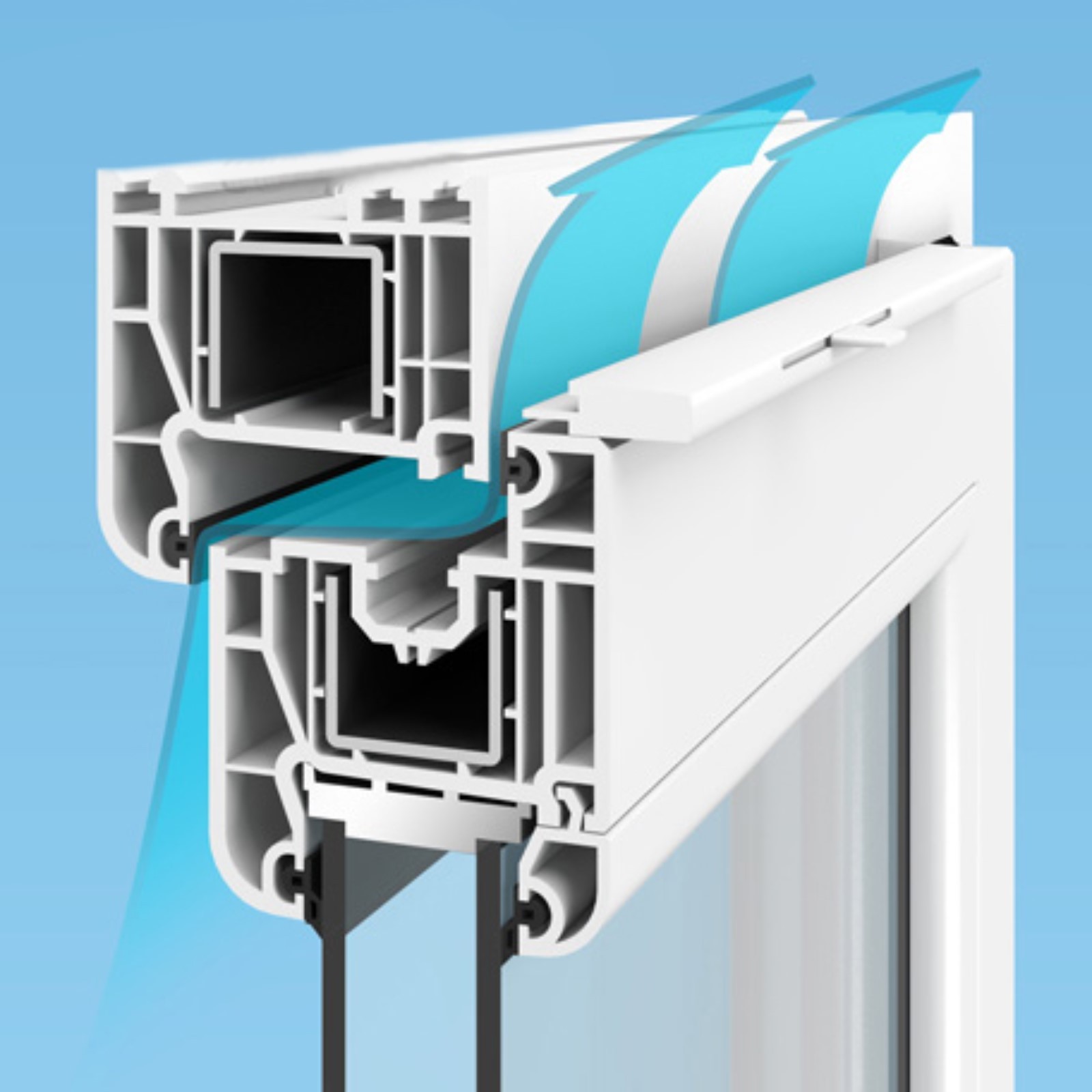
For those who appreciate automation, climate‑controlled valves are a good choice. They are installed in the upper part of the window: the valve regulates air inflow depending on humidity and temperature, preventing draughts. Models with manual adjustment are especially convenient — you can increase or decrease air exchange as needed.
Finally, modern solutions offer filtered supply ventilation units. These devices supply purified air even with the window fully closed, trapping dust, pollen and allergens. Such systems are ideal for city apartments near busy roads or for people with heightened sensitivity to air quality.
Proper ventilation with PVC windows is all about balancing comfort, temperature and air purity. Choose the right method — and your home will always feel fresh and cozy!
What windows do you like the best?
Which kind of windows would you prefer If you were going to replace the old ones in your house or apartment?
Eco House Joint Stock Company partner of Deceuninck Group | Copyright 2009-2026. All rights reserved.
E-mail: [email protected], tel.: +201212288828
Site www.ecohouse-eg.com is for informational purposes only and under no circumstances is not a public offer. For more information on the cost of materials, products and services, please contact the sales offices