
 whatsapp


WELCOME TO ECO HOUSE !WELCOME TO ECO HOUSE !WELCOME TO ECO HOUSE !




News
08/12/25
Sealer in PVC Windows: Unseen Guardian of Comfort
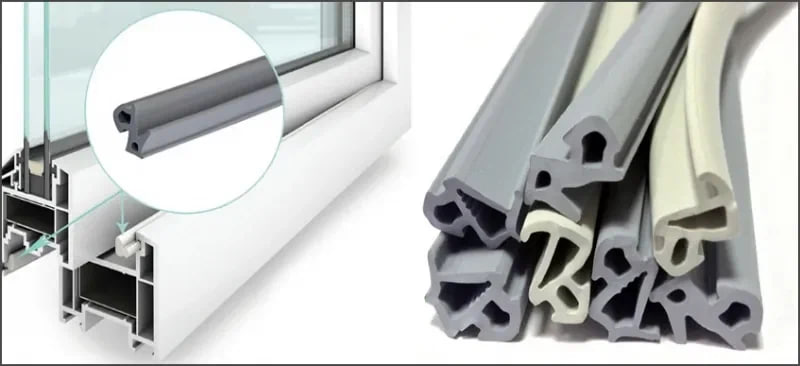
The sealing strip — an elastic gasket around the perimeter of the sash and frame — performs several critical functions that determine the comfort and energy efficiency of a window.
Key Functions
- Air Tightness
- prevents drafts and сквозняки;
- stops rainwater and dust from entering.
- Thermal Protection
- reduces heat loss through sash‑to‑frame joints;
- helps maintain a stable indoor temperature.
- Noise Insulation
- dampens sound waves that might penetrate through gaps;
- improves acoustic comfort, especially in noisy areas.
- Smooth Operation
- softens the sash movement when closing;
- eliminates slamming and squeaking noises.
- Hardware Protection
- reduces stress on hinges and locking mechanisms;
- extends the service life of window components.
- Flexibility and Adaptation
- compensates for minor profile deformations caused by temperature changes;
- maintains airtightness even if the sash slightly sags.
Important Notes
- A high‑quality sealing strip lasts 10–15 years but should be inspected 1–2 times a year.
- Replace it if it loses elasticity or shows mechanical damage.
- Different climatic zones require different materials (EPDM, TPE, silicone).
Without a properly functioning sealing strip, even the most expensive PVC window loses half its benefits. It’s this component that ensures a “tight seal” between the sash and the frame — and that’s what keeps your home warm, quiet, and dry.
What windows do you like the best?
Which kind of windows would you prefer If you were going to replace the old ones in your house or apartment?
uPVC Windows and Doors in Egypt. Any color of turn, tilt and turn, tilt sliding, sliding, parallel sliding system, arched non standard PVC windows. Mosquito nets, roller and lower shutter, jalousie in double glass or triple glazing by Super Spacer technology. Painted and bend uPVC profile, stained glass. Painting and bending PVC profile WINSA Carina, Vela. Maintenance and Repairing
Eco House Joint Stock Company partner of Deceuninck Group | Copyright 2009-2026. All rights reserved.
E-mail: [email protected], tel.: +201212288828
Site www.ecohouse-eg.com is for informational purposes only and under no circumstances is not a public offer. For more information on the cost of materials, products and services, please contact the sales offices



Eco House Joint Stock Company partner of Deceuninck Group | Copyright 2009-2026. All rights reserved.
E-mail: [email protected], tel.: +201212288828
Site www.ecohouse-eg.com is for informational purposes only and under no circumstances is not a public offer. For more information on the cost of materials, products and services, please contact the sales offices