
 whatsapp


WELCOME TO ECO HOUSE !WELCOME TO ECO HOUSE !WELCOME TO ECO HOUSE !




News
31/07/26
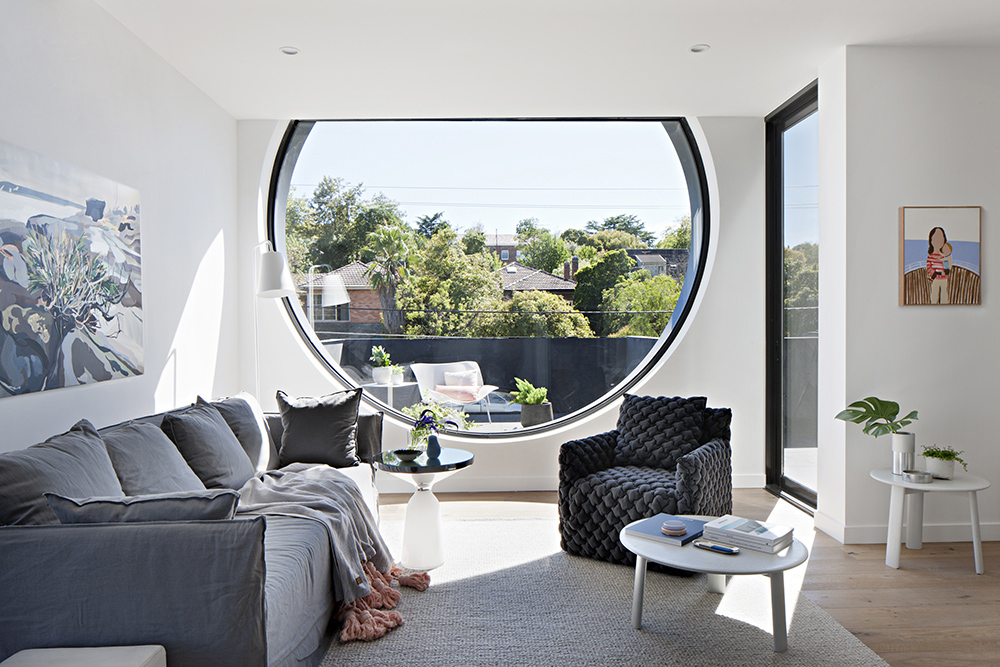
Round PVC Windows: When Shape Becomes Art
Round PVC windows aren’t just openings for light — they’re a striking architectural accent: they break away from the usual rectangular geometry and give a home a special charm. They’re often chosen for attics, lofts, bathrooms, staircases, and even as interior inserts — anywhere you want to add a touch of uniqueness and play with light. They look especially natural in nautical‑style homes, buildings with domed roofs, or interiors inspired by hobbit architecture: a small round window instantly creates a cozy, almost fairy‑tale atmosphere.
To achieve a perfect circle, the PVC profile is heated and carefully bent using special equipment. The technology demands precision, as even the slightest imperfection will be noticeable on the smooth curve. A steel reinforcing insert is always placed inside the frame: it holds the shape and prevents the window from deforming over time. For glazing, triplex or tempered glass is most commonly used — they’re stronger than regular glass and safer if they happen to get damaged.
Functionally, round windows come in different types: fixed ones for a purely decorative effect, and opening ones — with a single sash on a central hinge or divided by a mullion. However, opening models have some limitations: due to the shape, the sash can’t be too large or heavy, and the minimum radius usually starts at 50 cm.
Installing these windows is a job for professionals: it’s crucial to fit the frame perfectly into the opening and ensure airtightness all around the circle. Maintenance is also a bit more challenging: cleaning a round surface is harder than cleaning a rectangular one. But many people are willing to accept these small inconveniences for the sake of a distinctive look and an unusual light pattern — because a round window can transform an ordinary room into a truly special space.
What windows do you like the best?
Which kind of windows would you prefer If you were going to replace the old ones in your house or apartment?
Eco House Joint Stock Company partner of Deceuninck Group | Copyright 2009-2026. All rights reserved.
E-mail: info@ecohouse-eg.com, tel.: +201212288828
Site www.ecohouse-eg.com is for informational purposes only and under no circumstances is not a public offer. For more information on the cost of materials, products and services, please contact the sales offices