 whatsapp


WELCOME TO ECO HOUSE !WELCOME TO ECO HOUSE !WELCOME TO ECO HOUSE !




News
18/12/25
PVC Window Shapes: When Geometry Creates Style
Beyond conventional rectangular windows, modern PVC structures can take on the most unexpected shapes — opening up broad possibilities for architectural expression and custom design.
Main non‑standard shapes:
- Arched — a semicircular top gives buildings a classic or romantic appearance. Often used in cottages, restaurants, and historical reconstructions.
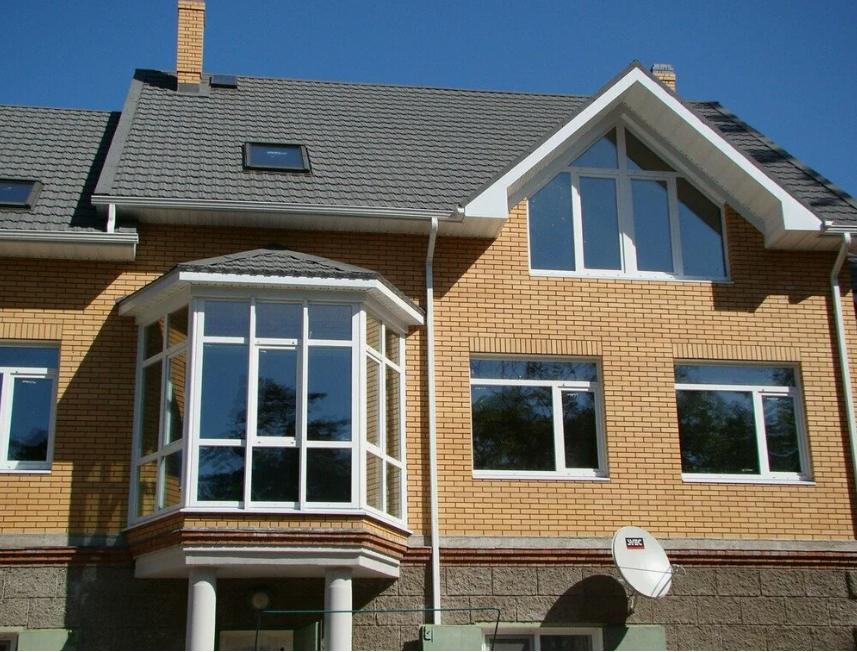
- Triangular — ideal for attics and houses with sloping roofs. Can be equilateral or right‑angled.
- Trapezoidal — fit well into complex architectural solutions, creating a dynamic effect.
- Round and oval — accent elements of the facade, often used as portholes or decorative inserts.
- Polygon (pentagonal, hexagonal) — create a unique geometric pattern, popular in contemporary architecture.
- Bay windows — a combination of several windows projecting beyond the wall plane, increasing glazing area and light intake.
Manufacturing specifics:
- Complex shapes require special equipment for profile bending.
- The more intricate the contour, the higher the cost (additional work on reinforcement and sealing).
- Airtightness and thermal insulation remain at standard window levels with proper installation.
Key considerations:
- Not all opening types suit non‑standard shapes (e.g., sliding systems are rarely implemented in arched designs).
- Wind load must be considered — complex shapes may require reinforced framing.
- For large glazing areas, a structural load calculation is mandatory.
Non‑standard windows are not just about aesthetics but also an engineering challenge. A well‑designed project and professional installation will turn an unusual window into a reliable and striking element of your home.
What windows do you like the best?
Which kind of windows would you prefer If you were going to replace the old ones in your house or apartment?
uPVC Windows and Doors in Egypt. Any color of turn, tilt and turn, tilt sliding, sliding, parallel sliding system, arched non standard PVC windows. Mosquito nets, roller and lower shutter, jalousie in double glass or triple glazing by Super Spacer technology. Painted and bend uPVC profile, stained glass. Painting and bending PVC profile WINSA Carina, Vela. Maintenance and Repairing
Eco House Joint Stock Company partner of Deceuninck Group | Copyright 2009-2026. All rights reserved.
E-mail: info@ecohouse-eg.com, tel.: +201212288828
Site www.ecohouse-eg.com is for informational purposes only and under no circumstances is not a public offer. For more information on the cost of materials, products and services, please contact the sales offices



Eco House Joint Stock Company partner of Deceuninck Group | Copyright 2009-2026. All rights reserved.
E-mail: info@ecohouse-eg.com, tel.: +201212288828
Site www.ecohouse-eg.com is for informational purposes only and under no circumstances is not a public offer. For more information on the cost of materials, products and services, please contact the sales offices