
 whatsapp


WELCOME TO ECO HOUSE !WELCOME TO ECO HOUSE !WELCOME TO ECO HOUSE !




News
14/08/26
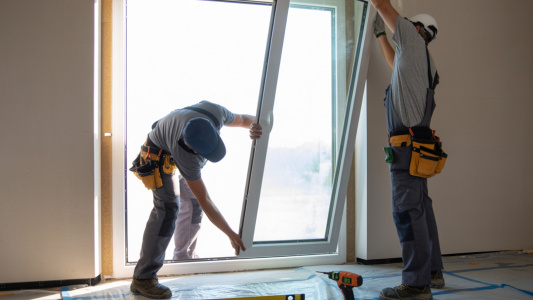
Birth of Comfort: How PVC Windows Are Installed
Installing a PVC window isn’t just about putting a frame in place — it’s a carefully planned sequence of steps where every detail matters. First, the opening is thoroughly cleaned of dust, debris, and remnants of old structures; if needed, it’s slightly levelled. A smooth base helps prevent misalignment and drafts.
Next, the frame is placed into the opening. It’s aligned using a level in two planes and held in position with wedges so it stays straight before being secured. Fixation is done in one of two ways — using anchor plates or directly through the profile. The choice depends on the wall material. At the same time, installation gaps of 15–20 mm are always left: they compensate for thermal movement and building settlement, preventing the frame from deforming.
The next step is sealing. The space between the frame and the wall is filled with mounting foam, which, once cured, acts as a reliable thermal insulator. Outside, the joint is covered with a waterproofing tape; inside, with a vapour barrier tape. This protects the foam from moisture and UV exposure, extending the window’s service life.
Installation is completed by fitting the drip edge and window sill. The drip edge directs rainwater away from the wall, while the window sill becomes a practical and attractive part of the interior. Finally, the sashes are hung, their movement checked for smoothness, the seal tightness verified, and the hardware adjusted. When all components work together seamlessly, the window not only enhances the home’s appearance but also reliably keeps it warm and quiet.
What windows do you like the best?
Which kind of windows would you prefer If you were going to replace the old ones in your house or apartment?
Eco House Joint Stock Company partner of Deceuninck Group | Copyright 2009-2026. All rights reserved.
E-mail: info@ecohouse-eg.com, tel.: +201212288828
Site www.ecohouse-eg.com is for informational purposes only and under no circumstances is not a public offer. For more information on the cost of materials, products and services, please contact the sales offices