
News
23/11/26
Burgundy Window Textiles — Luxury Within Everyone's Reach
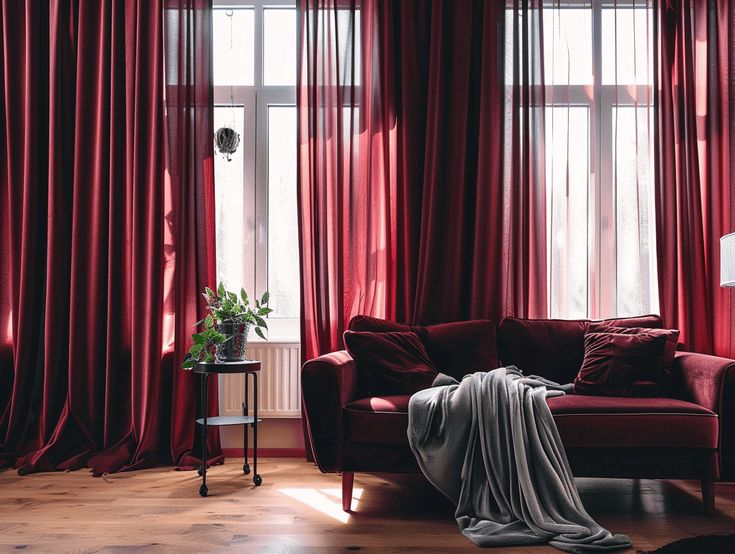
Burgundy is the color of fine wines, antique carpets, and English clubs. If you want the window to become the main character of the room, nothing works better. A PVC window with burgundy textiles instantly gains status: next to a rich wine hue, an ordinary plastic frame starts to look like a detail from an author-designed interior.
Burgundy is many-sided. A deep wine, almost chocolate-red, is for evening drapes in the bedroom and living room: dense fabric in a saturated shade sounds like a theater curtain. Lighter garnet and brick tones are more everyday: they shine in Roman blinds and light drapes, adding warmth without heaviness.
Burgundy's combinations are noble. With gold and brass — classic luxury, borrowed from grand old hotels. With cream and beige — the warm coziness of cherry wood. With graphite grey — strict modern elegance. With emerald — a deep, velvety duo inspired by old libraries. And of course, with white — a vivid contrast where burgundy plays first violin.
A practical argument for burgundy: dark saturated colors hide dirt well and don't require frequent washing. And dense burgundy blackout fabrics are among the best for light blocking: a bedroom with such curtains becomes a reliable cocoon for deep sleep.
One caution: burgundy is a soloist. Don't place another loud accent next to it, or the room will turn into an endless banquet. Give it a neutral background — and it will earn every ruble.
Burgundy textiles at the window are a way of saying: "People with character live here." Sometimes one curtain is enough for the whole house to sound different.
uPVC Windows and Doors in Egypt. Any color of turn, tilt and turn, tilt sliding, sliding, parallel sliding system, arched non standard PVC windows. Mosquito nets, roller and lower shutter, jalousie in double glass or triple glazing by Super Spacer technology. Painted and bend uPVC profile, stained glass. Painting and bending PVC profile WINSA Carina, Vela. Maintenance and Repairing
Eco House Joint Stock Company partner of Deceuninck Group | Copyright 2009-2026. All rights reserved.
E-mail: info@ecohouse-eg.com, tel.: +201212288828
Site www.ecohouse-eg.com is for informational purposes only and under no circumstances is not a public offer. For more information on the cost of materials, products and services, please contact the sales offices
