
News
11/10/26
Windows for Kitchen: Practicality, Light, and Protection from Steam
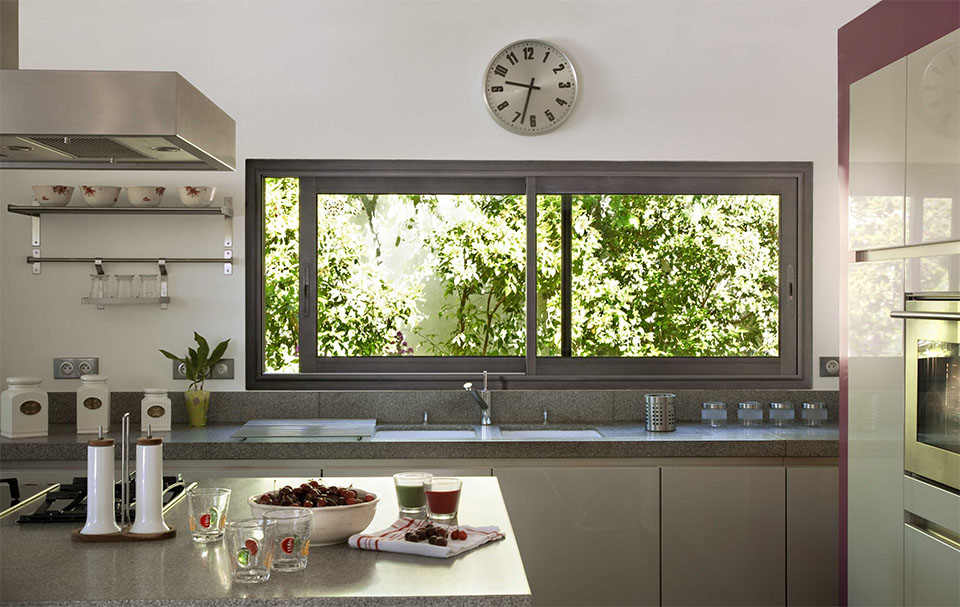
The kitchen is one of the most “active” rooms in the house — you cook here, wash dishes, and often open windows to ventilate. That’s why PVC windows for the kitchen should be especially practical and resistant to fluctuations in humidity and temperature.
The first criterion is moisture resistance. Because of steam and splashes, the profile and seals must withstand high humidity without deforming or losing elasticity. Pay attention to the quality of the plastic and the tightness of the joints — this will protect against condensation and mold.
The second is ventilation. In the kitchen, it’s important to quickly remove odors and excess moisture. Windows with a micro‑ventilation mode, a small vent, or a supply air valve are ideal: they provide a flow of fresh air even in cold weather.
The third is illumination. Natural light makes the kitchen cozier and more convenient for cooking. Choose double‑glazed units with high light transmittance and frames with slim profiles so they don’t “eat up” the light. This is especially important if the kitchen is small.
The fourth is ease of maintenance. Kitchen windows get dirty faster, so smooth profile surfaces and a mosquito net that’s easy to remove for cleaning are a big plus. Glass with a dirt‑repellent coating will make cleaning much easier.
The fifth is sound and thermal insulation. Even if the kitchen isn’t noisy, a multi‑chamber profile and a high‑quality double‑glazed unit will retain heat and reduce outside noise. If there’s a gas stove nearby, it’s important that the window doesn’t overheat — choose components that are heat‑resistant.
The sixth is safety and convenience. For families with children, child safety locks are a good idea, and for easy cleaning, choose sashes that open easily and can be fixed in place. If the windowsill is used as a work surface, think about the height and strength of the design.
By considering these criteria, you’ll choose windows that will last a long time and make the kitchen bright, convenient, and comfortable.
uPVC Windows and Doors in Egypt. Any color of turn, tilt and turn, tilt sliding, sliding, parallel sliding system, arched non standard PVC windows. Mosquito nets, roller and lower shutter, jalousie in double glass or triple glazing by Super Spacer technology. Painted and bend uPVC profile, stained glass. Painting and bending PVC profile WINSA Carina, Vela. Maintenance and Repairing
Eco House Joint Stock Company partner of Deceuninck Group | Copyright 2009-2026. All rights reserved.
E-mail: info@ecohouse-eg.com, tel.: +201212288828
Site www.ecohouse-eg.com is for informational purposes only and under no circumstances is not a public offer. For more information on the cost of materials, products and services, please contact the sales offices
