
News
02/10/26
From Opening to Cozy Home: How PVC Windows Are Installed
Installing PVC windows isn’t just about “putting in a frame” — it’s a precise technological process that determines the window’s thermal performance, sound insulation, and lifespan.
First, specialists carefully measure the opening. Even millimetre‑level errors can lead to misalignment and drafts. Next, the old window is removed, and the opening is cleared of debris, dust, and loose material. If needed, the reveals are levelled and cracks sealed.
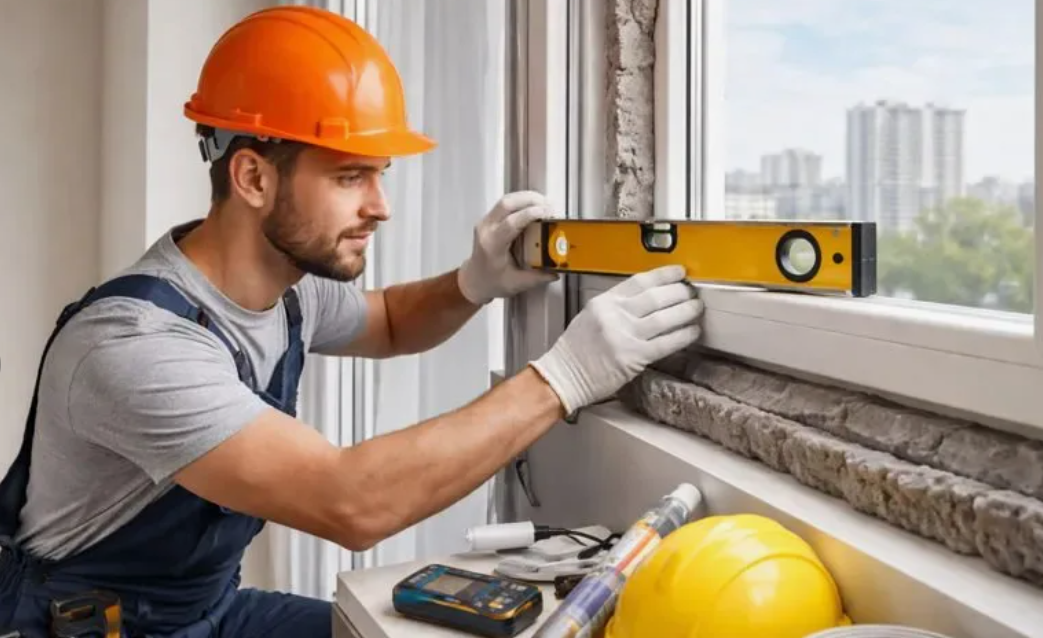
Then the new window is prepared: the sashes and glazing units are removed to make installation easier. The frame is placed in the opening, aligned with a level, and secured using anchor plates or through‑fasteners — the choice depends on the wall material. It’s important to maintain the correct mounting gaps: gaps that are too narrow or too wide will reduce thermal insulation.
Once the frame is fixed, the installation joint is created. First, foam is applied to fill voids and provide thermal insulation. Then it’s protected from moisture and UV exposure: a vapour‑permeable tape is used on the outside, and a vapour‑barrier tape on the inside. This prevents freezing and condensation.
Next, the sashes and glazing units are reinstalled, and the hardware is adjusted so that the sashes fit tightly and open smoothly. At the final stage, the window sill and reveals are installed, joints are sealed, and construction waste is removed.
Finally, technicians check the window’s operation: the tightness of the seal, smooth movement, and absence of misalignment. Proper installation turns a window into a reliable barrier against cold and noise — and ensures it lasts for decades.
uPVC Windows and Doors in Egypt. Any color of turn, tilt and turn, tilt sliding, sliding, parallel sliding system, arched non standard PVC windows. Mosquito nets, roller and lower shutter, jalousie in double glass or triple glazing by Super Spacer technology. Painted and bend uPVC profile, stained glass. Painting and bending PVC profile WINSA Carina, Vela. Maintenance and Repairing
Eco House Joint Stock Company partner of Deceuninck Group | Copyright 2009-2026. All rights reserved.
E-mail: info@ecohouse-eg.com, tel.: +201212288828
Site www.ecohouse-eg.com is for informational purposes only and under no circumstances is not a public offer. For more information on the cost of materials, products and services, please contact the sales offices
