
News
17/08/26
Role of Mounting Foam in PVC Window Installation
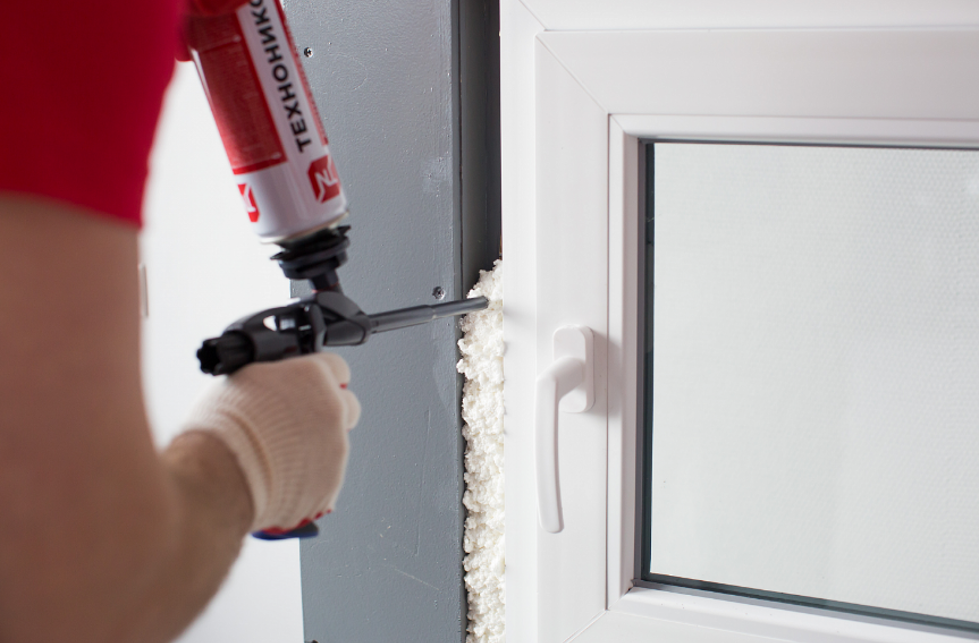
Mounting foam is the quiet hero of PVC window installation — unassuming, yet responsible for some of the most critical tasks. Essentially, it’s a polyurethane sealant that expands to fill the gaps between the frame and the wall, creating a reliable barrier against cold and outdoor noise. Its thermal insulation properties prevent the window from becoming a “cold bridge,” while its dense structure dampens sound waves, making the room noticeably quieter.
At the same time, foam isn’t a substitute for fasteners: it shouldn’t bear the weight of the window. Its purpose is to seal and insulate. Professionals take the foam’s secondary expansion into account: they apply it to about two‑thirds of the joint’s depth, leaving room for the material to expand so the growing mass doesn’t deform the profile.
Another key feature is its vulnerability to external factors. UV light causes the foam to degrade quickly, and moisture reduces its insulating qualities. That’s why, according to proper installation rules, the joint is covered on the outside with waterproofing tape and on the inside with vapour barrier tape. This protects the foam so it retains its properties for decades.
Equally valuable is the foam’s ability to fill complex irregularities — it conforms well to brick, concrete, and wood alike, compensating for minor imperfections in the opening. The key is to follow the correct technique: apply it to a clean, slightly damp surface, avoid cutting off the excess too early, and always protect the finished joint. Then the foam becomes that invisible shield that preserves warmth, quiet, and comfort in the home for years to come.
uPVC Windows and Doors in Egypt. Any color of turn, tilt and turn, tilt sliding, sliding, parallel sliding system, arched non standard PVC windows. Mosquito nets, roller and lower shutter, jalousie in double glass or triple glazing by Super Spacer technology. Painted and bend uPVC profile, stained glass. Painting and bending PVC profile WINSA Carina, Vela. Maintenance and Repairing
Eco House Joint Stock Company partner of Deceuninck Group | Copyright 2009-2026. All rights reserved.
E-mail: info@ecohouse-eg.com, tel.: +201212288828
Site www.ecohouse-eg.com is for informational purposes only and under no circumstances is not a public offer. For more information on the cost of materials, products and services, please contact the sales offices
