
News
12/08/26
From Granule to Radiant Opening: How PVC Windows Are Made
The journey of a PVC window begins long before the workshop — with precise measurements and design: any inaccuracy will later result in drafts or misalignment. Then the extrusion line takes over: PVC granules melt, pass through a die, and turn into a profile with an intricate system of chambers — these are what give the window its warmth and sound insulation. Often, the profile is laminated or painted so the window fits harmoniously into the facade.
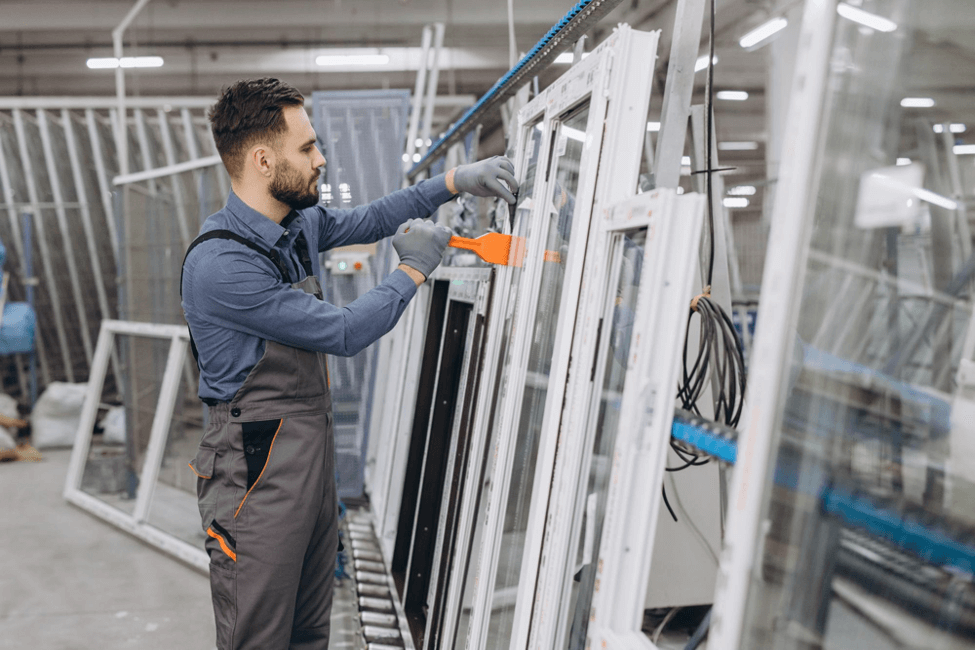
In production, the profile is cut at an angle, milled for hardware and drainage, and a steel insert is placed inside — it prevents the frame from deforming due to wind and temperature fluctuations. The corners are welded at high temperature, and the seams are carefully cleaned: perfect geometry is the key to a tight seal. At the same time, double‑glazed units are assembled: the glass panes are cleaned, joined with spacer bars containing a desiccant, sealed, and often have their chambers filled with argon for better thermal insulation.
Next comes assembly: sashes are fitted into the frame, seals and hardware are installed, double‑glazed units are hung and secured with glazing beads. Each window is tested — the movement of the sashes, the tightness of the seal, and the operation of the mechanisms. Only after this is it packed and sent to the customer — so the home can become brighter, quieter, and cozier.
uPVC Windows and Doors in Egypt. Any color of turn, tilt and turn, tilt sliding, sliding, parallel sliding system, arched non standard PVC windows. Mosquito nets, roller and lower shutter, jalousie in double glass or triple glazing by Super Spacer technology. Painted and bend uPVC profile, stained glass. Painting and bending PVC profile WINSA Carina, Vela. Maintenance and Repairing
Eco House Joint Stock Company partner of Deceuninck Group | Copyright 2009-2026. All rights reserved.
E-mail: info@ecohouse-eg.com, tel.: +201212288828
Site www.ecohouse-eg.com is for informational purposes only and under no circumstances is not a public offer. For more information on the cost of materials, products and services, please contact the sales offices
