
News
05/08/26
Heart of the Window: What’s Hidden Inside PVC Window Profile
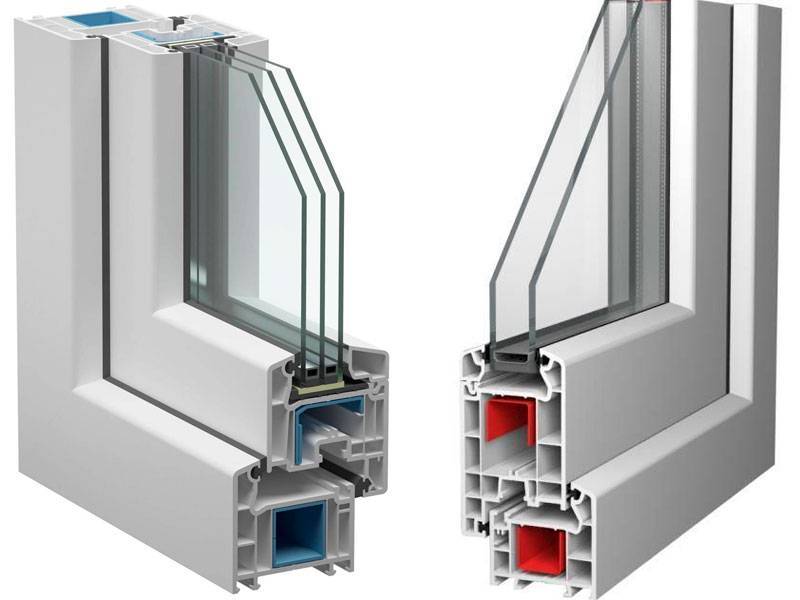
A PVC window looks simple: a frame, a sash, and glass. But behind this sleek appearance lies a carefully engineered system. Inside the window profile, there isn’t just solid plastic — it’s a complex network of chambers separated by thin partitions. This cellular structure is what makes PVC windows so reliable.
Each chamber serves a purpose. The air pockets act as thermal insulators: they slow down the transfer of cold from outside and help keep the warmth inside the house. The more chambers there are — typically from three to five or even more — the higher the window’s energy efficiency. At the same time, the profile doesn’t become bulky: engineers precisely calculate wall thicknesses and partition placement to strike a balance between strength and thermal insulation.
An important part of the design is the steel reinforcement. An galvanized metal insert is placed inside one of the central chambers. It gives the profile rigidity, prevents the frame from deforming under the weight of the sashes, and helps it resist wind loads. Without this element, the window would quickly lose its shape.
Technological details are just as crucial: drainage channels to remove condensation, grooves for seals and hardware. All of this turns an ordinary piece of plastic into a sophisticated system that protects the home from cold, wind, and noise for years.
A PVC profile isn’t just the outer shell of a window — it’s a продуманный “skeleton” where every detail works to ensure comfort and durability.
uPVC Windows and Doors in Egypt. Any color of turn, tilt and turn, tilt sliding, sliding, parallel sliding system, arched non standard PVC windows. Mosquito nets, roller and lower shutter, jalousie in double glass or triple glazing by Super Spacer technology. Painted and bend uPVC profile, stained glass. Painting and bending PVC profile WINSA Carina, Vela. Maintenance and Repairing
Eco House Joint Stock Company partner of Deceuninck Group | Copyright 2009-2026. All rights reserved.
E-mail: info@ecohouse-eg.com, tel.: +201212288828
Site www.ecohouse-eg.com is for informational purposes only and under no circumstances is not a public offer. For more information on the cost of materials, products and services, please contact the sales offices
