
News
29/05/26
Mounting Foam: The Secret to Reliable PVC Window Installation
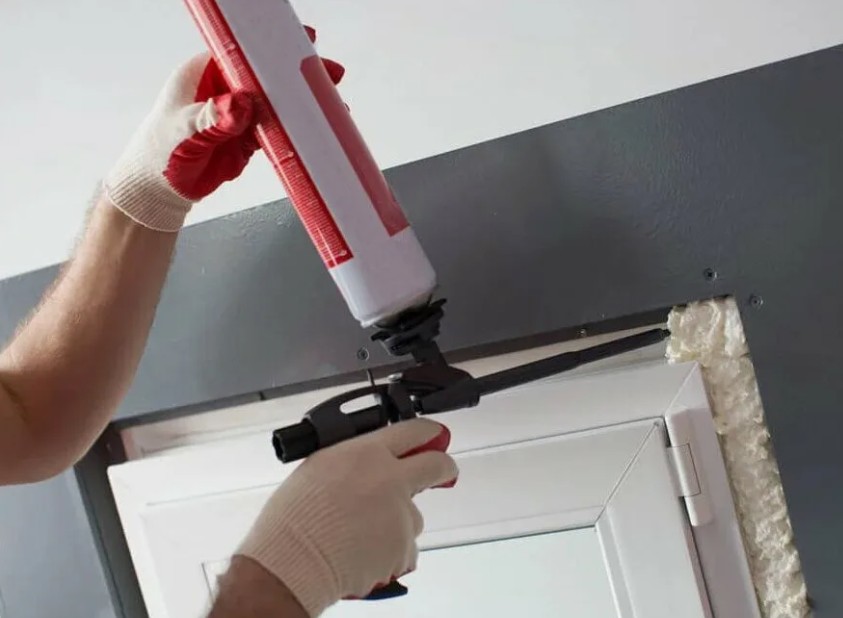
Mounting foam is an essential material when installing PVC windows: it provides thermal and sound insulation, seals the joints between the frame and the wall, and helps compensate for minor irregularities in the opening. Let’s look at how to use it correctly to ensure your window lasts long and functions without issues.
The key is choosing the right type of foam. For cold‑weather work, opt for frost‑resistant foam — it polymerises even at sub‑zero temperatures. For warm seasons, standard foam will do. Pay attention to the expansion ratio: for windows, a medium‑expansion foam is ideal — it fills the gap without putting excessive pressure on the frame.
Before application, thoroughly prepare the surface: clean it of dust, dirt, and crumbling areas. For better adhesion and faster polymerisation, lightly moisten the opening walls with water — the ideal humidity level is 60–80 %. Shake the can vigorously for a minute before use to ensure a uniform mixture.
Apply the foam to no more than one‑third of the gap width — the material will expand and fill the entire space. Hold the can in an inverted position: this way, the gas pushes the compound out evenly. Fill the seams uniformly, without gaps, especially in the corners — this is critical for airtightness.
After application, let the foam fully cure (usually 8 hours). Then protect it from ultraviolet light — UV rays degrade the material’s structure. To do this, install reveals, apply putty, or use a special protective compound. Trim off any excess neatly after the foam has hardened.
Keep in mind: mounting foam does not replace mechanical fasteners (anchors or dowels). It serves for insulation, not for fixing the frame. By following these rules, you’ll ensure a reliable window installation and extend its service life.
uPVC Windows and Doors in Egypt. Any color of turn, tilt and turn, tilt sliding, sliding, parallel sliding system, arched non standard PVC windows. Mosquito nets, roller and lower shutter, jalousie in double glass or triple glazing by Super Spacer technology. Painted and bend uPVC profile, stained glass. Painting and bending PVC profile WINSA Carina, Vela. Maintenance and Repairing
Eco House Joint Stock Company partner of Deceuninck Group | Copyright 2009-2026. All rights reserved.
E-mail: info@ecohouse-eg.com, tel.: +201212288828
Site www.ecohouse-eg.com is for informational purposes only and under no circumstances is not a public offer. For more information on the cost of materials, products and services, please contact the sales offices
