
News
31/01/26
Plastic Windows for Hot Climates and Coastal Areas
In conditions of heat and high humidity, window structures must meet special requirements. Let’s review the key criteria for selecting plastic windows for such regions.
1. Profile: Thickness and UV Protection
Mandatory reinforcement (steel insert, 1.5 mm) to resist thermal deformation.
UV stabilizers in the PVC composition — prevent yellowing and brittleness from sunlight.
2. Insulating Glass Units: Heat Reflection
Multifunctional glass with silver coating: reflects up to 60 % of infrared radiation, reducing indoor heat gain.
Low‑E coating — allows light transmission while blocking heat.
Double‑glazed unit (3 panes) filled with argon — optimal for hot climates.
Unit thickness: at least 32 mm.
3. Hardware: Corrosion Protection
Choose rust‑resistant hinges and locking mechanisms
Must have anti‑corrosion coating — critical for coastal areas with salty air.
4. Ventilation: Balancing Temperature and Humidity
Micro‑ventilation mode — ensures constant airflow without drafts.
Ventilation valve — regulates air exchange, preventing condensation.
For maximum protection against dust and insects — mosquito nets with fine mesh.
5. Additional Solutions
External roller shutters — block heat before it reaches the glass.
Inter‑glass blinds — do not collect dust and protect from sunlight.
Tinting or reflective films — reduce brightness but may darken the interior.
6. Installation: Considerations for Coastal Areas
Use silicone sealants with UV protection — resistant to moisture and UV rays.
Ensure waterproofing of joints — prevents penetration of salty moisture.
For ground‑floor installations — fine‑mesh mosquito protection (against sand and insects).
Conclusion:
For hot climates and coastal areas, the following are essential: thick profile with UV stabilizers; multifunctional insulating glass units; corrosion‑resistant hardware;well‑designed ventilation system.
The right choice will reduce air conditioning load, protect against humidity, and extend the service life of windows by 15–20 years.
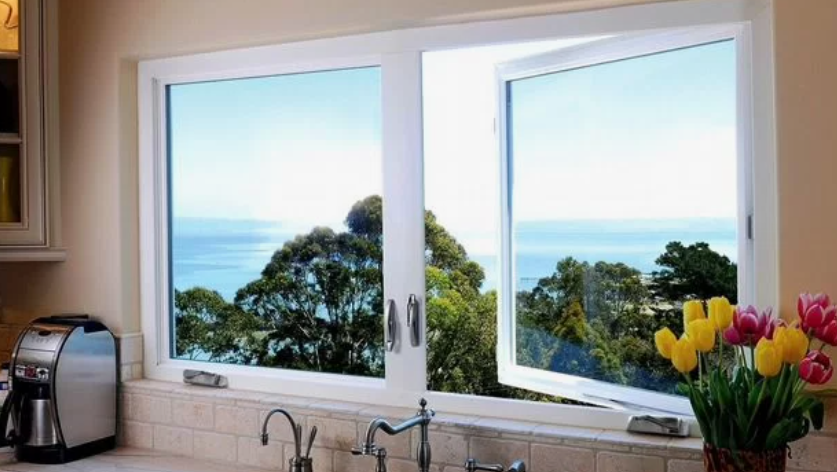
uPVC Windows and Doors in Egypt. Any color of turn, tilt and turn, tilt sliding, sliding, parallel sliding system, arched non standard PVC windows. Mosquito nets, roller and lower shutter, jalousie in double glass or triple glazing by Super Spacer technology. Painted and bend uPVC profile, stained glass. Painting and bending PVC profile WINSA Carina, Vela. Maintenance and Repairing
Eco House Joint Stock Company partner of Deceuninck Group | Copyright 2009-2026. All rights reserved.
E-mail: [email protected], tel.: +201212288828
Site www.ecohouse-eg.com is for informational purposes only and under no circumstances is not a public offer. For more information on the cost of materials, products and services, please contact the sales offices
