
News
11/01/26
Combining Roller Shutters and Curtains in PVC Window Decor
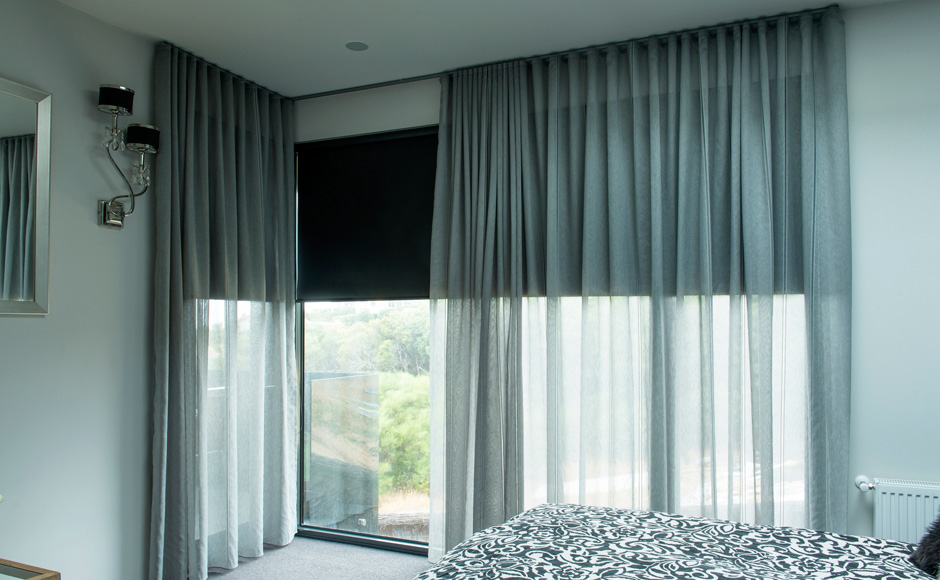
Roller shutters and curtains are not mutually exclusive elements but a successful duo that combines practicality (protection from light and prying eyes) with aesthetics (soft lines, texture play). Let’s explore the key rules for combining them.
Why Combine Them?
• Multi layered light protection: roller shutters block 80–100 % of sunlight; curtains soften residual light and add warmth.
• Spatial zoning: curtains visually “warm up” the window, while shutters provide functionality.
• Flexible control: shutters for quick darkening, curtains for fine tuned light adjustment and decor.
• Hiding technical elements: fabric conceals the shutter box, creating a cohesive window look.
Basic Combination Principles
1. Style Unity
o For classic interiors: thick drapes + shutters with subtle patterns (floral, geometric).
o For minimalism: plain shutters and lightweight curtains without drapery.
o For eco style: natural material shutters (bamboo) + linen curtains.
2. Contrast or Tone Play
o Monochrome: shutters and curtains in the same color family but different shades (e.g., gray shutters + beige curtains).
o Accent: vibrant shutters + neutral curtains, or vice versa.
o Pattern + Solid: patterned shutters + plain curtains (or vice versa).
3. Texture Coordination
o Smooth shutters (polyester, PVC) — paired with soft fabrics (velvet, cotton).
o Textured shutters (bamboo, linen) — matched with natural materials (cotton, rough canvas).
4. Color Accents
o Select a dominant color from the shutter pattern and repeat it in curtains or accessories (tiebacks, lambrequins).
o Neutral shutters (white, beige) are versatile: they pair with any curtain color.
Mounting Options
• Ceiling mounted shutters + ceiling curtain rod: aligned tops create symmetry.
• Frame mounted shutters + wall mounted curtain rod: layered look with visual separation.
• Double rod system: for Roman shades and shutters — both elements attach to the window, saving space.
• Shutters inside the opening + curtains outside: shutters remain hidden when curtains are open.
Practical Tips
• Avoid overloading: limit to three colors and avoid complex drapery if shutters already have a pattern.
• Consider window size: narrow openings benefit from minimalist solutions (plain shutters + tulle).
• Check mechanism compatibility: curtains must not obstruct shutter movement.
• Maintenance: choose easy to wash fabrics and shutters with stain resistant coatings.
Summary: harmonious combination of shutters and curtains relies on balancing function and style. The key is to coordinate colors, textures, and mounting methods to create a unified window composition.
uPVC Windows and Doors in Egypt. Any color of turn, tilt and turn, tilt sliding, sliding, parallel sliding system, arched non standard PVC windows. Mosquito nets, roller and lower shutter, jalousie in double glass or triple glazing by Super Spacer technology. Painted and bend uPVC profile, stained glass. Painting and bending PVC profile WINSA Carina, Vela. Maintenance and Repairing
Eco House Joint Stock Company partner of Deceuninck Group | Copyright 2009-2026. All rights reserved.
E-mail: info@ecohouse-eg.com, tel.: +201212288828
Site www.ecohouse-eg.com is for informational purposes only and under no circumstances is not a public offer. For more information on the cost of materials, products and services, please contact the sales offices
